
Blogs

Welcome to our comprehensive data modeling beginner’s guide for 2026. Navigating the ever-evolving landscape of data management requires careful consideration of your database structure, as it directly influences the effectiveness, scalability, and overall performance of your applications. In this guide, we’ll discuss the intricacies of data modeling, providing insights to empower you in confidently selecting a database structure that aligns seamlessly with your needs.
Whether you’re new to data modeling or looking to refresh your knowledge, we’ve got you covered. Let’s dive into the fascinating world of data modeling to make informed choices and optimize the performance of your applications.
What is Data Modeling?
Data modeling can be defined as the process of creating a visual representation of either a whole information system or parts of it to communicate connections between data points and structures. In simple words, it can be thought of as a way of drawing a picture or a diagram that shows how different pieces of information are connected. This helps us design a database, which is like a super-organized filing system for a company’s data. The goal is to make sure the data is reliable, consistent, and high-quality, meeting the company’s needs. Now that we’ve understood what is data modeling, let’s delve into the levels of a data model.
Levels of Data Models
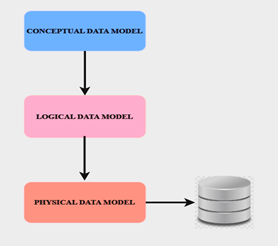
There are three levels of a data model: conceptual data model, logical data model, physical data model. Let’s understand them further.
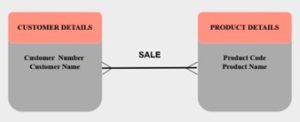
Conceptual Data Model
A conceptual data model highlights the business significance of each data entity, focusing on identifying the business-related data rather than getting into technical details.
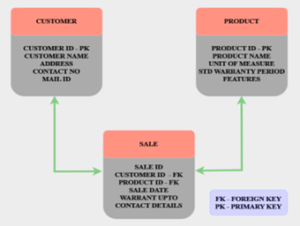
Logical Data Model
A logical data model gives a detailed description of each data entity, their attributes and the relationship between two entities. This helps assign a business purpose to every bit of information.
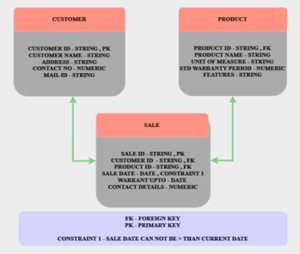
Physical Data Model
A physical data model gives a technical view of the data i.e. the table name, column name, datatype, constraints, indexes, primary key, triggers, stored procedures, etc.
Reasons to Use Data Modeling
Now that we’re cognizant of what is data modeling, let’s dive deeper into the reasons to use data modeling and how businesses can benefit from it.
Essential Steps for Data Modeling
As we wrap up our data modeling beginner’s guide for 2026, it’s clear that understanding and implementing data modeling is crucial for effective data management and analysis. From grasping the basics of what is data modeling to exploring the various levels such as conceptual data model, logical data model, and physical data model, along with the essential steps, we’ve covered valuable insights into this foundational aspect of data science. Our next guide will explain the types of data models along with their pros and cons. Until then, remember, data modeling not only helps organize and structure your data but also enhances decision-making and operational efficiency. Keep practicing these principles, and you’ll be well on your way to mastering data modeling.