
For decades, a financial emergency between paychecks meant one of a short list of bad options: a payday loan, a high-interest credit card, or asking family for help. Earned Wage Access (EWA) replaces that list with a simpler idea — employees can draw on wages they have already earned, before the scheduled payday, without taking on debt or paying interest. It’s not a loan and it’s not an advance against money not yet earned; it’s access to compensation that has already been worked for, moved up in time.
What If Payday Wasn’t a Fixed Date?
That’s the idea behind NQ Digital Lending Platform & Early Payday: it lets employees access money they’ve already earned, whenever they need it — no loan, no interest, no waiting for a fixed date on the calendar. Work today, get paid today (or whenever it’s needed). For a workforce used to a once-a-month or twice-a-month payday, that flexibility changes what a financial emergency actually costs an employee: instead of a high-interest loan to bridge a ten-day gap, it’s simply an earlier withdrawal of money that was always theirs.
Why Financial Stress Is a Workplace Problem, Not Just a Personal One
Financial stress is one of the biggest drags on workplace productivity. An employee worried about covering a bill before payday is distracted, less focused, and more likely to leave for an employer who offers more support. EWA doesn’t erase financial stress, but it removes the waiting: employees get breathing room without taking on debt to get it.
More Than a Perk: The Business Case for EWA
EWA is becoming a standard part of compensation packages for a few concrete reasons:
- It reduces financial stress. Knowing pay is accessible when it’s needed gives employees peace of mind, which shows up as better focus and less burnout.
- It helps attract and retain talent. In competitive sectors like banking, finance, and large enterprises, offering EWA is a visible differentiator in a tight labor market.
- It boosts productivity. Less time spent worrying about money is more mental space for the actual job.
- It modernizes the benefits package. Today’s workforce increasingly judges an employer by the real financial support it offers, not just the base salary.
The Market Is Moving Fast
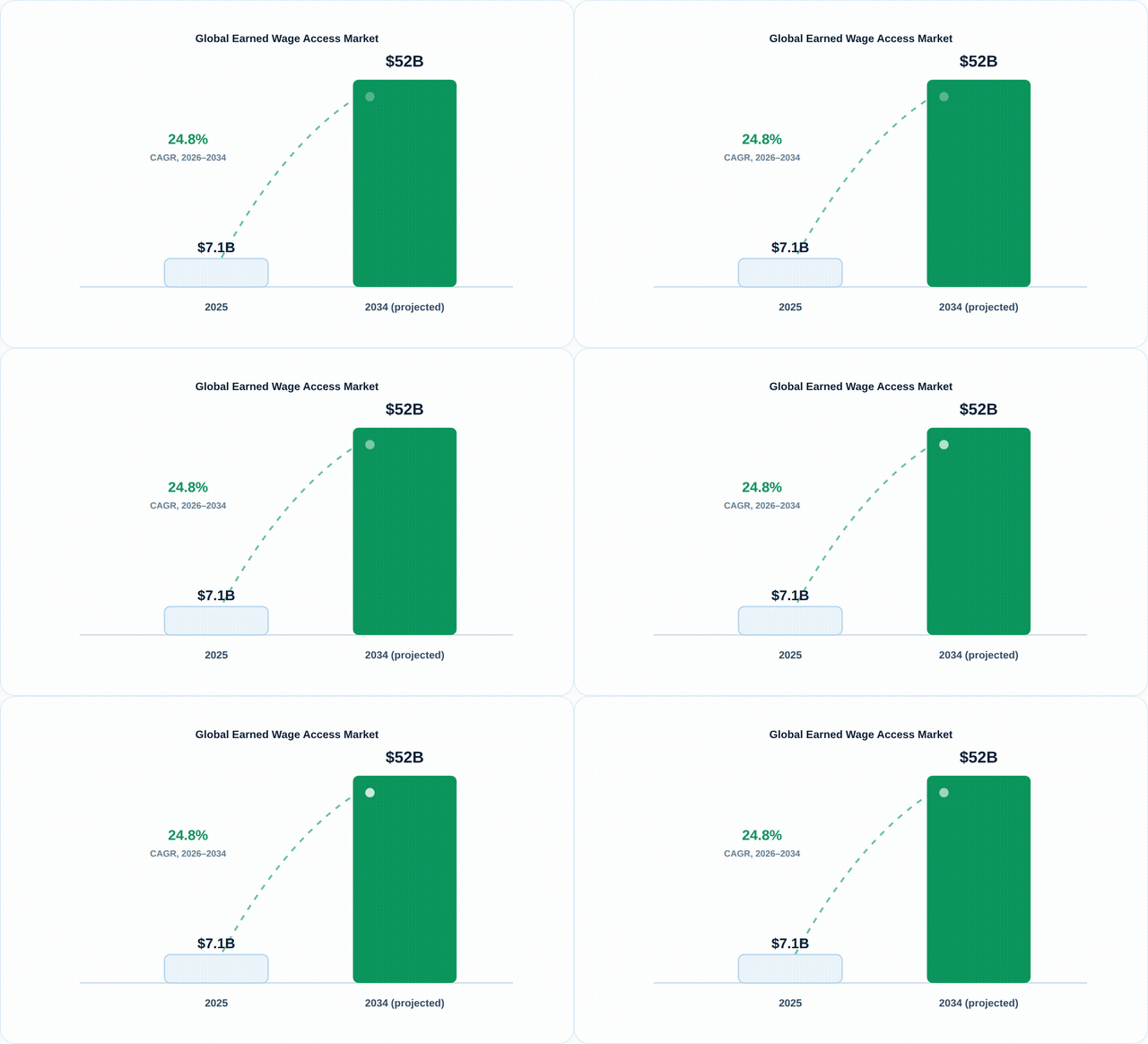
EWA has gone from a niche benefit to one of the fastest-growing categories in workplace financial wellness. The global EWA market was valued at roughly $7.1 billion in 2025 and is projected to reach about $52 billion by 2034 — a compound annual growth rate near 24.8% through the period. North America currently holds the largest share of that market, but adoption is accelerating everywhere digital payments infrastructure is strong, including markets like India where UPI-based instant transfers make same-day disbursement straightforward.
A Step-by-Step Guide to Implementing EWA
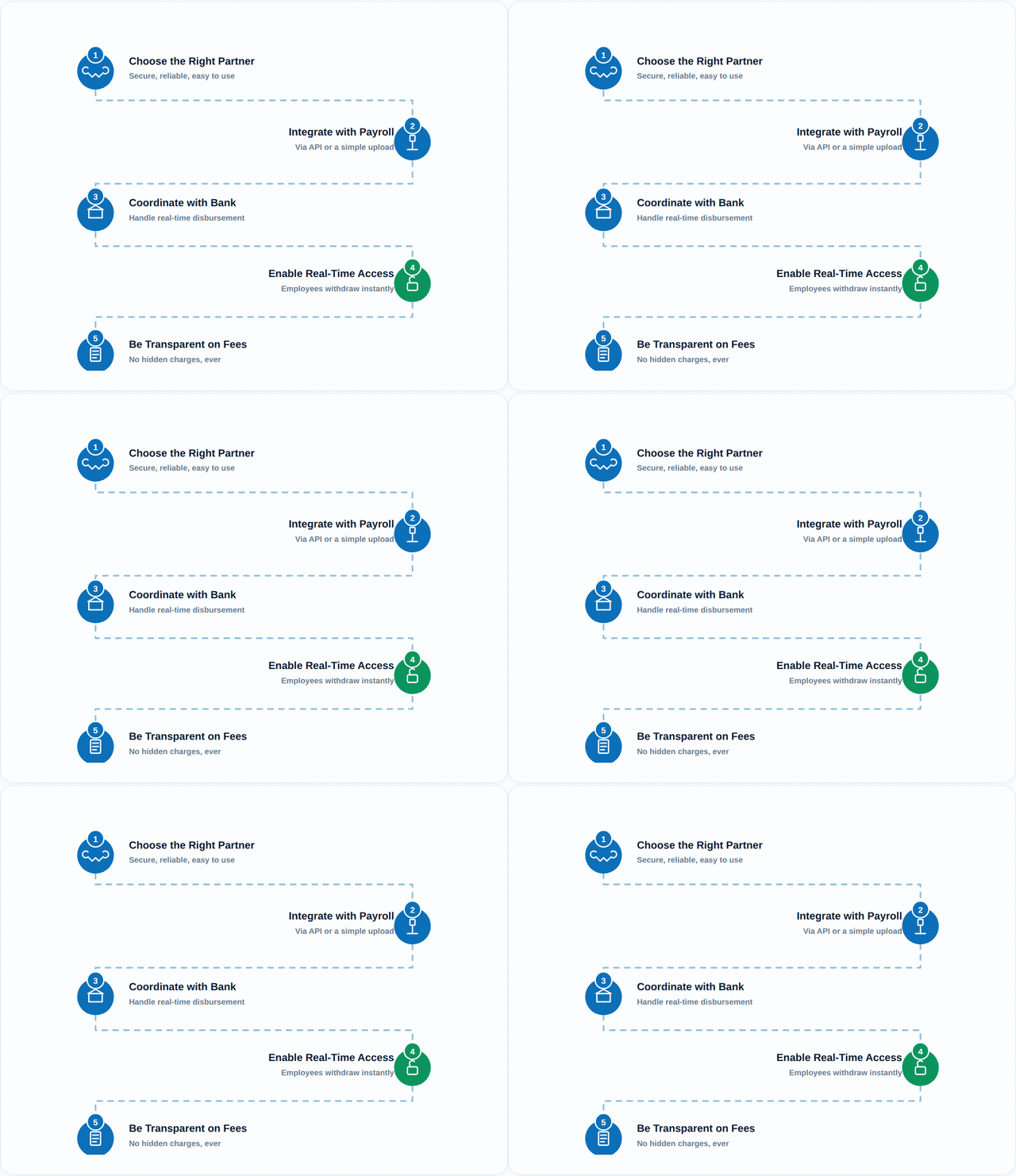
Rolling out EWA doesn’t require overhauling payroll. In practice, it comes down to five steps:
- Choose the right EWA partner. Look for a provider that is secure, reliable, and easy to use — with real-time wage tracking, strong compliance, and user-friendly tools.
- Integrate with the payroll system. This can be done via API or something as simple as a scheduled upload, making it workable for companies of any size without a payroll overhaul.
- Coordinate with the salary bank. The provider can work with an existing salary bank or help onboard a new one to handle real-time disbursements.
- Enable real-time access for employees. Employees log in, check their earned balance, and withdraw funds instantly, with the system handling the calculations and transfers automatically.
- Be transparent about fees. No hidden charges — everything is outlined and agreed upon upfront, which is what keeps the model trustworthy and compliant.
Where This Fits in 2026: Regulatory Clarity and India’s Emerging Framework
The biggest open question around EWA has always been regulatory: is this a loan, subject to the same disclosure and interest-rate rules as credit? In the US, the Consumer Financial Protection Bureau answered that question in a December 2025 advisory opinion. The CFPB determined that “Covered EWA” — products that draw strictly from verified, already-earned wages, repay through the employer’s payroll deduction process, leave the worker with no liability if a deduction falls short, and involve no creditworthiness assessment — does not meet the definition of “credit” under Regulation Z (TILA). That clears a major compliance question for employer-integrated EWA products and is expected to accelerate adoption through 2026, though the CFPB left room for continued scrutiny of products that don’t meet all four conditions.
India’s regulatory picture is still being written. The country’s EWA market currently runs almost entirely on the employer-integrated model — the employer deducts the disbursed amount from the employee’s next salary, which shifts repayment risk away from the worker. A proposed Draft EWA Bill would formalize this with daily usage caps, mandatory fee transparency, and RBI registration for funders, signaling that regulators see real promise in the model but want guardrails against it drifting toward high-cost, loan-like products. For employers evaluating a provider in 2026, that combination — US regulatory clarity plus India’s move toward formal registration — is a signal that EWA is maturing from an experimental perk into standard payroll infrastructure.
The Takeaway
Earned Wage Access turns payday from a fixed date into a line an employee can draw on as they earn it — no interest, no loan, no waiting. The business case is now backed by real numbers: a market headed toward $52 billion by 2034, and in late 2025 the CFPB gave employer-integrated EWA the regulatory clarity it had been missing. Rolling it out is a five-step integration project, not a payroll overhaul, which is exactly why it’s moving from early-adopter benefit to standard compensation infrastructure in 2026.
Join The Conversation
Share your perspective. Comments are moderated before they appear.