
Banks and NBFCs keep running into the same wall: too much documentation, too many handoffs, and not enough speed. AI agents are starting to change that equation.
The approval problem nobody talks about loudly
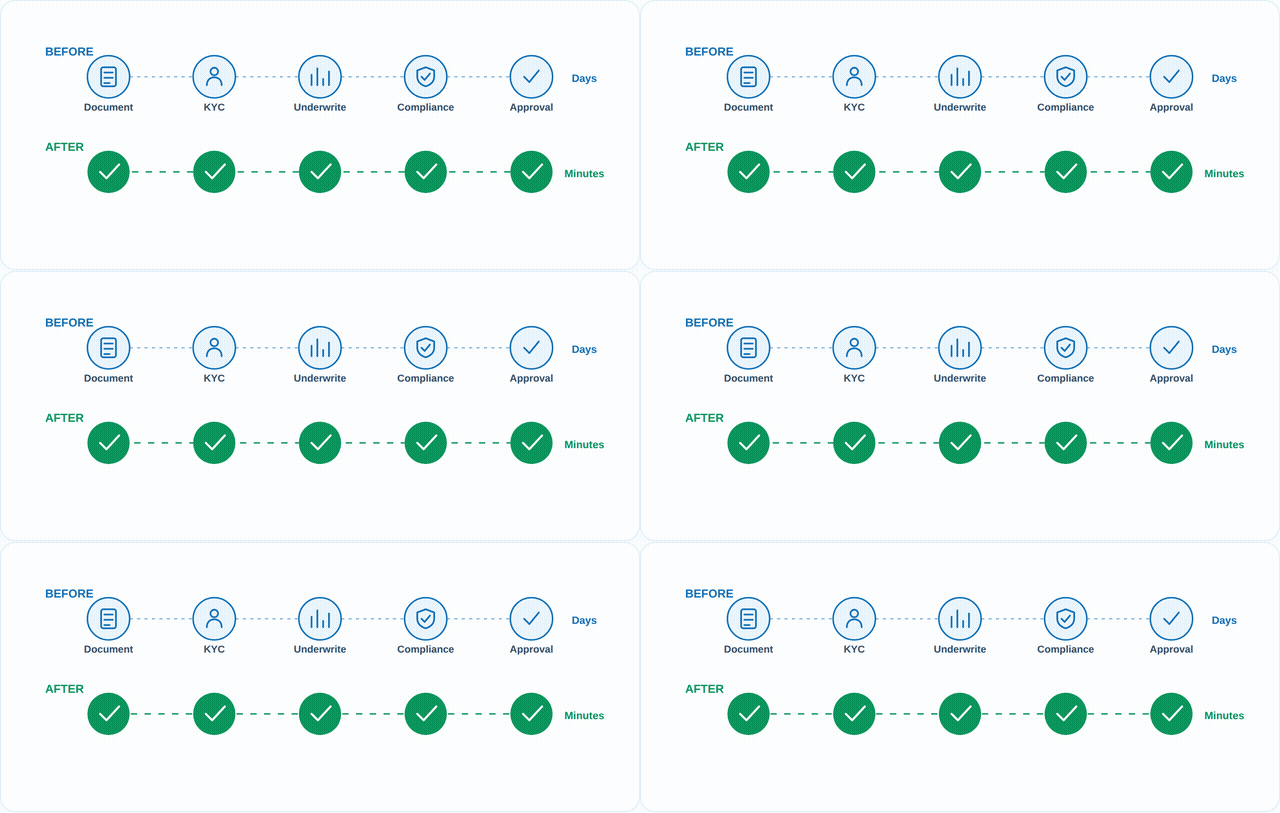
A mid sized NBFC or private bank typically takes five to fifteen business days to approve an SME loan. The actual risk assessment inside that window takes a day, sometimes less. Everything else is waiting, for documents, for compliance sign off, for a slot in the underwriting queue, for a legal review. That is an architecture problem, not a people problem.
What an AI agent actually is
An AI agent is a step up from a chatbot or a script. It reads context, makes a decision, takes an action, and coordinates with other agents or with a person based on what it finds. It can work across several systems at once, reading unstructured material such as scanned documents alongside structured fields in a database.
Inside a credit workflow, that means an agent can pull a borrower’s bank statements, check them against bureau data, flag income inconsistencies, confirm policy compliance and draft a preliminary credit memo before an underwriter has even opened the file.
Where the credit lifecycle actually loses time
Five or six bottlenecks show up again and again.
- Document collection: applications arrive incomplete, and chasing the missing pieces takes repeated manual follow up.
- KYC and identity verification: disconnected systems mean separate logins and manual cross checking.
- Underwriting and risk scoring: underwriters read statements, calculate ratios and write a risk narrative from scratch every time.
- Compliance and policy checks: regulatory requirements add another round of sign off before a file can move forward.
- Approval and disbursement: final approvals travel through email chains and physical sign offs, adding another day or two.
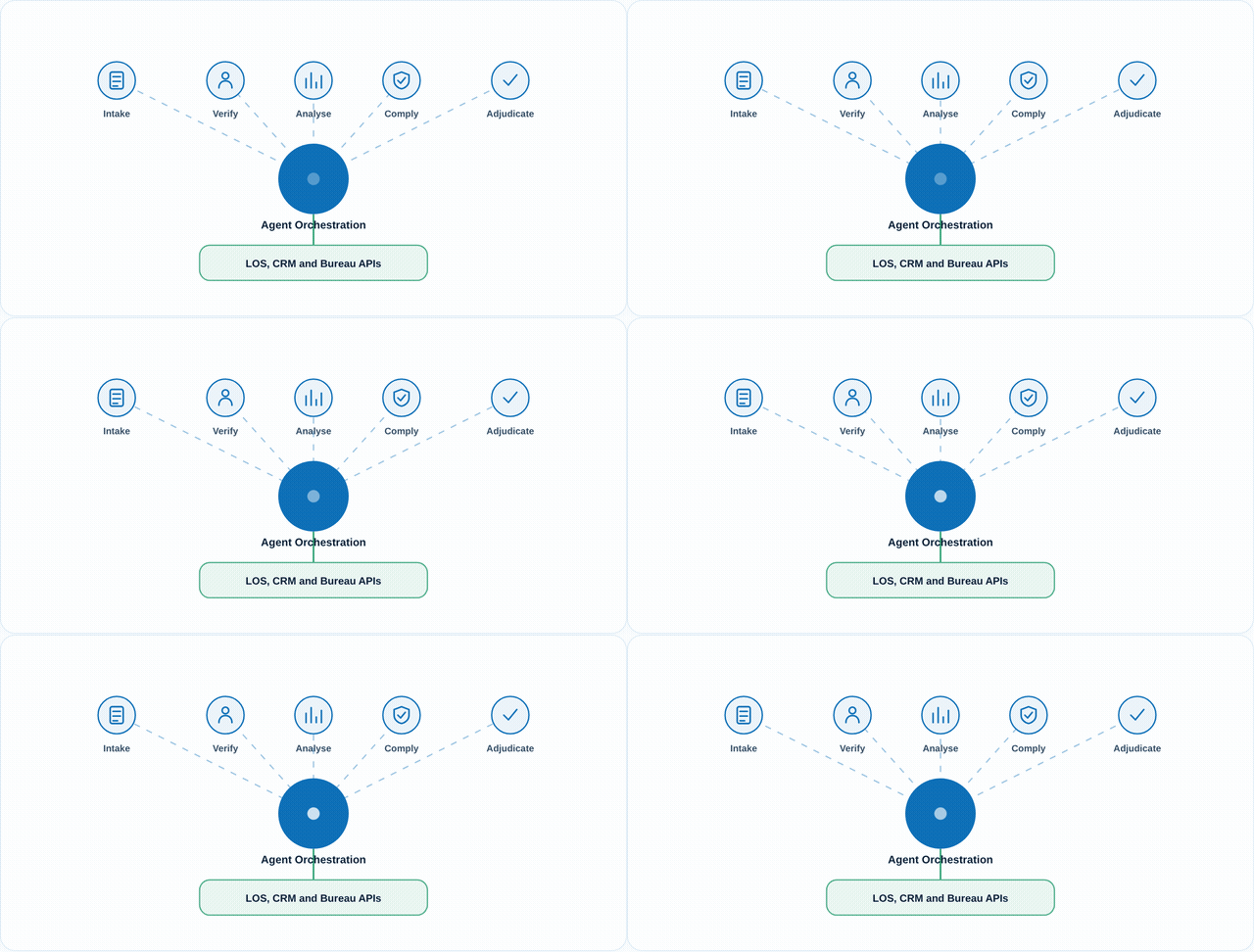
How AI agents rewire each stage
Document intake and triage
An intake agent accepts documents in whatever format they arrive, PDF, photo or email attachment, and classifies, extracts and validates them immediately. A missing or unreadable item triggers a targeted follow up request within minutes instead of days.
Identity and bureau verification
A verification agent connects directly to CIBIL, Experian and internal KYC systems through their APIs, running checks in parallel rather than one after another, without a person logging into each portal by hand.
Financial statement analysis
A financial analysis agent reads multiple years of bank statements, computes the relevant ratios, spots irregular transactions, checks declared income against actual inflows, and flags anything higher risk. It applies the same logic consistently across many applications at once.
McKinsey research on banks using large language models for borrower data extraction and statement analysis reports time savings of 30 to 50 percent on credit memo preparation.
Policy and compliance checks
A compliance agent tracks regulatory requirements as they evolve, checks every file against RBI guidelines and internal policy, and logs each check for audit purposes as it happens.
Adjudication and escalation
An adjudication agent brings the full picture together, risk score, supporting data, any exceptions, and a plain language rationale. It can auto approve within set thresholds, auto decline with a documented reason, or escalate to a human underwriter with everything already assembled. In practice, that leaves people reviewing the roughly thirty percent of cases that genuinely need judgment, not the seventy percent that do not.
What this looks like in numbers
Studies of consumer lending show loan processing times dropping by 50 to 70 percent when AI enabled workflows coordinate intake, verification and underwriting at the same time. Separate research from McKinsey’s Risk and Resilience Practice puts the productivity uplift from multi agent systems at 40 to 80 percent per use case, with more consistent outcomes across the board.
For an NBFC processing thousands of applications a month, that compression means serving more borrowers with the same team, reducing NPA risk through more consistent underwriting, and competing on turnaround time rather than on rate alone.
The implementation trap most institutions fall into
Many institutions start with the agent layer itself, the models, the interface, the orchestration logic, before addressing data readiness. Agents built on fragmented, unvalidated sources produce fragmented results.
Key Takeaway
The institutions that get this right treat data readiness as a prerequisite, not an afterthought. They build a clean, governed data pipeline first, then put the agent layer on top of it. That sequencing, more than any single model choice, is what separates a pilot from something that actually scales.
The real question for your institution
The question for a CRO or CTO is not which AI tool to buy. It is whether the current data and systems can support agents that are reliable, auditable and defensible to a regulator. Most institutions are closer to ready than they assume, but getting the rest of the way there is an architecture question, not a shopping list.
Join The Conversation
Share your perspective. Comments are moderated before they appear.