
Banks, insurers, and financial institutions have always known that relationships drive loyalty. What’s changed is what customers expect from those relationships. They want faster responses, advice that feels tailored to them, and communication that actually feels relevant — not a quarterly statement and a branch visit. Data and AI are no longer sitting quietly in the background of that relationship; they’re at the center of it, helping BFSI companies anticipate needs, personalize engagement, and earn trust at scale.
The Old Model Stopped Working
For decades, customer interaction in financial services was mostly transactional: visit the bank to open an account, call an agent with a loan question, hear from your insurer at renewal time. That worked when competition was limited. Three shifts made it outdated — customers now expect 24/7 digital access, generic notifications get lost in the noise, and a single bad experience (a slow claim, a confusing statement) is enough to push someone toward a competitor. If a streaming app can predict what you’ll want to watch next, the bar for what a bank should know about you has moved too.
How Data and AI Enable Intelligent Engagement
A few capabilities are doing most of the work behind this shift:
- A unified customer view. Most BFSI institutions have customer data scattered across CRM tools, payment platforms, core banking systems, and call logs. AI stitches these into a single 360-degree profile — instead of “Account No. 4567,” the system sees “Ravi, 34, salaried, frequent UPI user, likely to consider a home loan soon.”
- Predictive engagement. AI doesn’t just analyze past behavior, it anticipates what’s next: which customers are likely to churn, which policyholders might let coverage lapse, who’s ready for a cross-sell offer — all before the customer raises their hand.
- Hyper-personalization at scale. Generic reminders give way to messages like “Your SIP has grown 12% — reinvest the returns?” or “Your car insurance expires in 15 days, renew in one click.” Relevant beats generic, every time.
- Real-time responsiveness. AI-powered chatbots and virtual assistants cut response times and operational costs, while NLP flags service gaps before they escalate into complaints.
- Compliance and risk awareness. None of this works if it isn’t accountable — AI also helps institutions monitor interactions and stay compliant while keeping communication transparent.
Case Study: Building a Customer 360 Support & CX Portal
A leading bank came to NeoQuant with a familiar problem: customer engagement fragmented across phone banking, branch visits, email, chatbots, and an escalation desk, with no single place for support executives to see the full picture. We built an in-house application to capture every customer interaction — account opening status, delivery tracking, and more — across all of those touchpoints in one reference point.
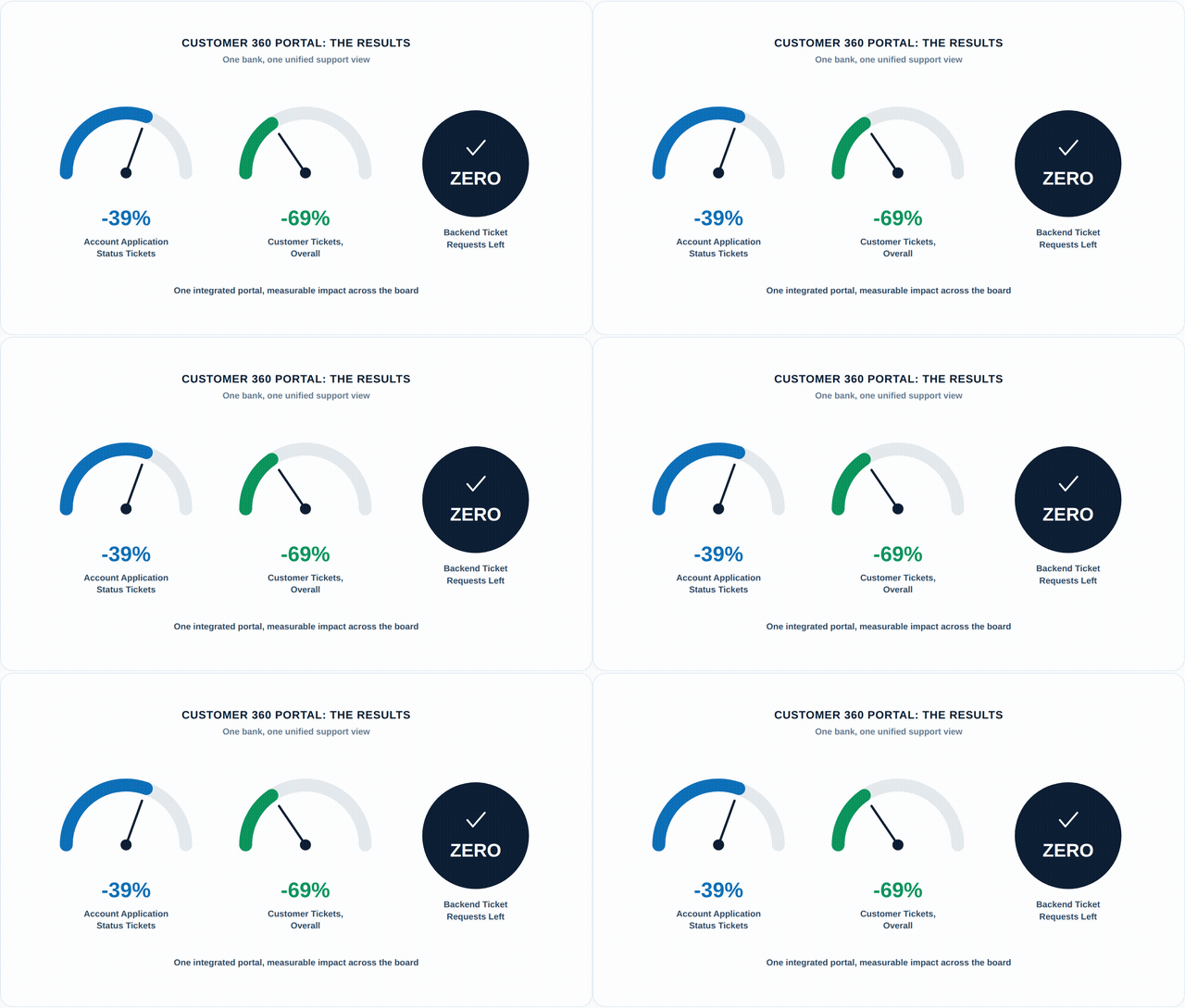
The results spoke for themselves: a roughly 39% reduction in tickets related to account application status, a roughly 69% reduction in customer tickets overall, and backend ticket requests brought down to zero.
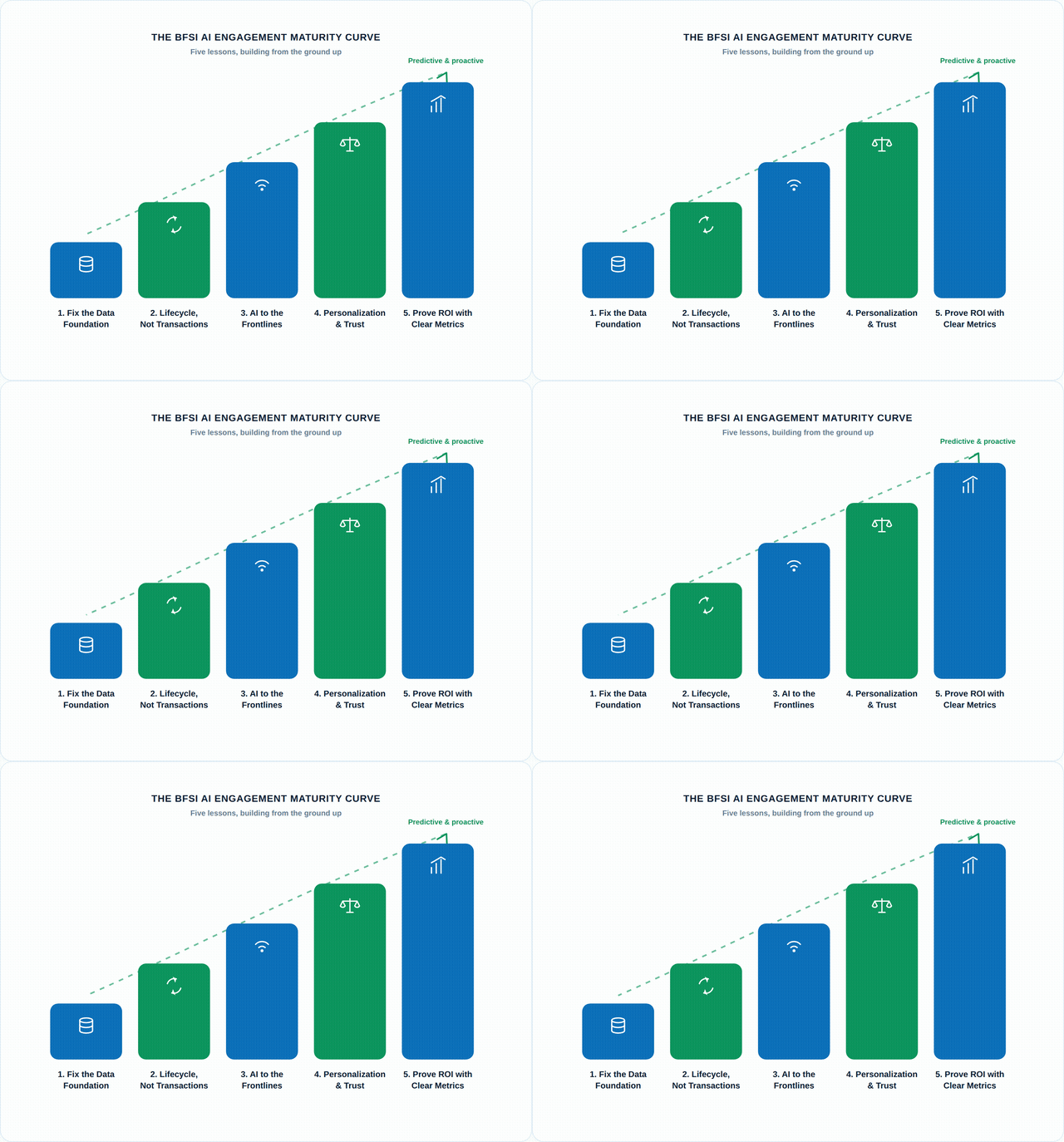
Five Lessons for BFSI Institutions
- Fix the data foundation first. AI cannot function effectively on messy, siloed data. Clean integration comes before anything else.
- Think lifecycle, not transactions. Engagement doesn’t end at account opening — it extends across onboarding, usage, renewal, and advocacy.
- Bring AI to the frontlines. Insights should reach advisors, relationship managers, and apps directly, not stay locked in backend reports.
- Balance personalization with trust. Customers appreciate relevance, but transparency about how their data is used is non-negotiable.
- Prove ROI with clear metrics. Track churn, NPS, response times, and cross-sell performance to demonstrate the value AI is actually delivering.
The Role of AI in Content and Communication
Numbers alone don’t build loyalty — communication does. AI supports this through natural language generation that turns complex reports into plain-language summaries, tone adaptation that shifts formality for different audiences, multilingual support that breaks down language barriers, and content optimization that tests subject lines, formats, and timing. Done well, AI makes communication feel more human, not less.
Where This Fits in 2026: From Experimentation to Production
The gap between banks talking about AI and banks running it at scale is still wide. Current industry data shows 70% of commercial banks have adopted AI in at least one core function, yet 78% remain stuck in what’s described as “tactical mode” rather than running AI as a core driver of the business, and only about 1 in 4 banks worldwide are actively using AI for genuine competitive advantage. The institutions pulling ahead are the ones treating engagement as Bank of America has with its Erica virtual assistant, which has now crossed 2.5 billion client interactions across 20 million customers — proof that AI-driven engagement compounds once it’s embedded rather than bolted on.
The next wave is agentic: rather than just recommending a next step, 2026-era systems are increasingly expected to orchestrate entire customer journeys — choosing the channel, the timing, the message, and looping in a human only when it’s genuinely needed. Generative AI is also moving into advisory itself, comparing financial products and running personalized scenarios rather than just answering static FAQs. The fundamentals from this blog — a unified view, predictive intent, personalization balanced with trust — are exactly what makes that next step possible instead of risky.
The Takeaway
The future of financial services won’t be defined by products or interest rates alone. It will be shaped by how well institutions listen, respond, and adapt to what customers actually need — often before they ask. Data and AI give BFSI firms the tools to move from one-size-fits-all communication to engagement that’s meaningful, timely, and predictive. The firms that strike the right balance between technology and human connection won’t just keep pace — they’ll set the standard everyone else follows.
Join The Conversation
Share your perspective. Comments are moderated before they appear.