
What if your automation didn’t just follow instructions, but made decisions? That’s the promise of agentic AI. Unlike a traditional bot that needs every step spelled out, an agentic system works more like a capable team member: it understands context, adapts when conditions change, and collaborates with other systems and people to get to an outcome. For enterprises juggling complex workflows, growing data volumes, and distributed teams, that difference matters — agentic AI isn’t just a technical upgrade, it’s a different way to scale automation.
What Is Agentic AI?
Traditional automation — robotic process automation (RPA), most commonly — follows rules and produces predictable results. It’s excellent at repetitive, well-defined tasks executed exactly the same way every time. Agentic AI is a different category: powered by large language models and generative AI, it gives software “agents” the ability to think, decide, and act on their own within a business workflow. Unlike a basic bot, an agent can interpret context, answer questions it wasn’t explicitly programmed for, and navigate workflows that don’t follow a single fixed path.
Why Agentic AI Matters at Enterprise Scale
Scaling is where agentic AI earns its keep. By orchestrating agents, deterministic bots, and human workflows together, an enterprise can automate a process end-to-end — from intake to exception handling to final decision — across systems and departments that previously required separate automations stitched together by hand. That’s a meaningfully different kind of scale than automating one function at a time.
Core Components of an Agentic AI Framework
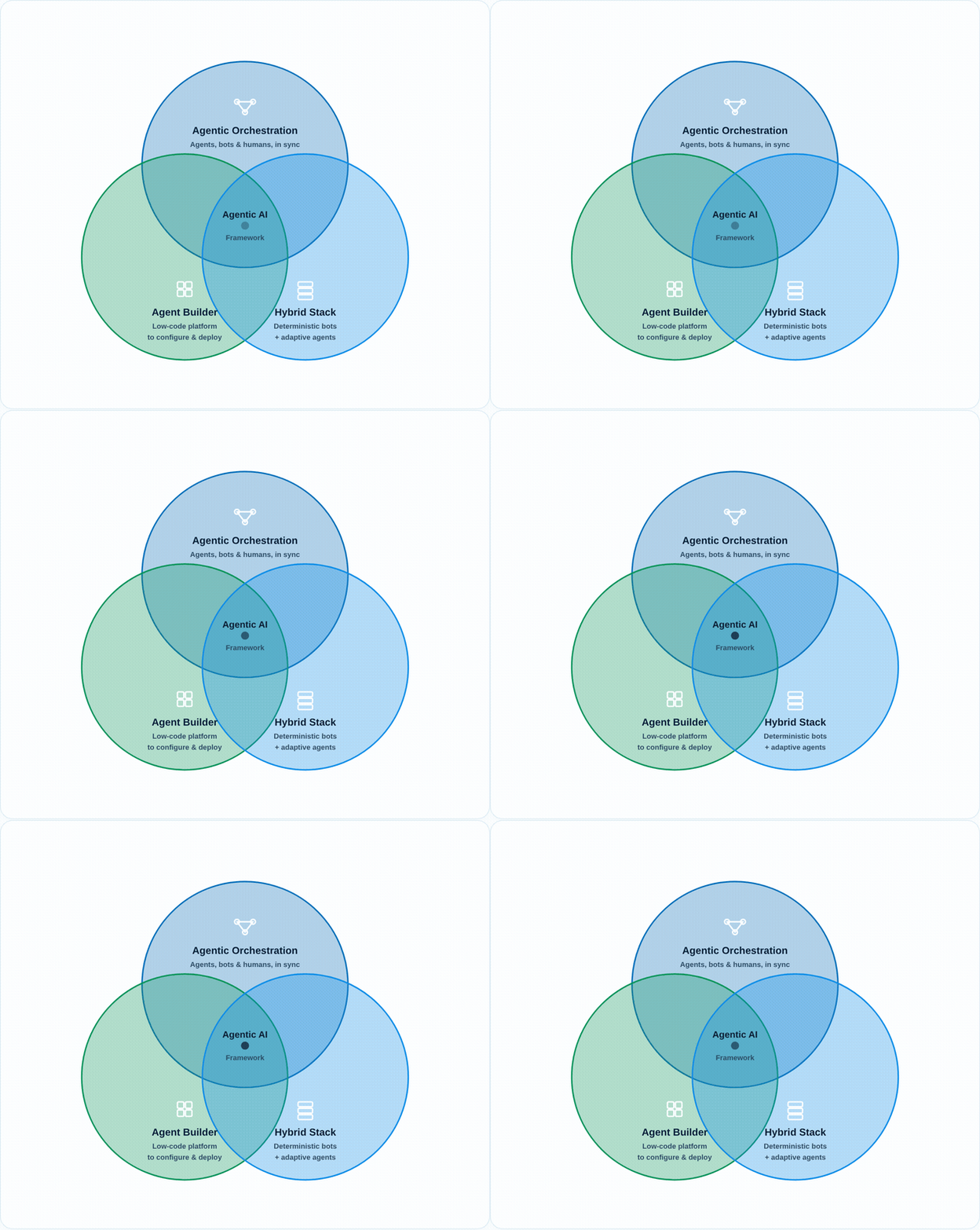
An agentic AI framework goes beyond traditional automation by enabling goal-driven agents that can adapt, decide, and collaborate. Three components make that possible:
- Agentic Orchestration — keeps autonomous agents, deterministic bots, and human users working in harmony rather than in conflict.
- Agent Builder Platform — a low-code environment for configuring and deploying agents without a from-scratch engineering effort for every use case.
- Hybrid Automation Stack — deterministic bots continue handling structured, repetitive tasks, while agents take on the unexpected or complex scenarios that need judgment.
Real-World Applications Across Industries
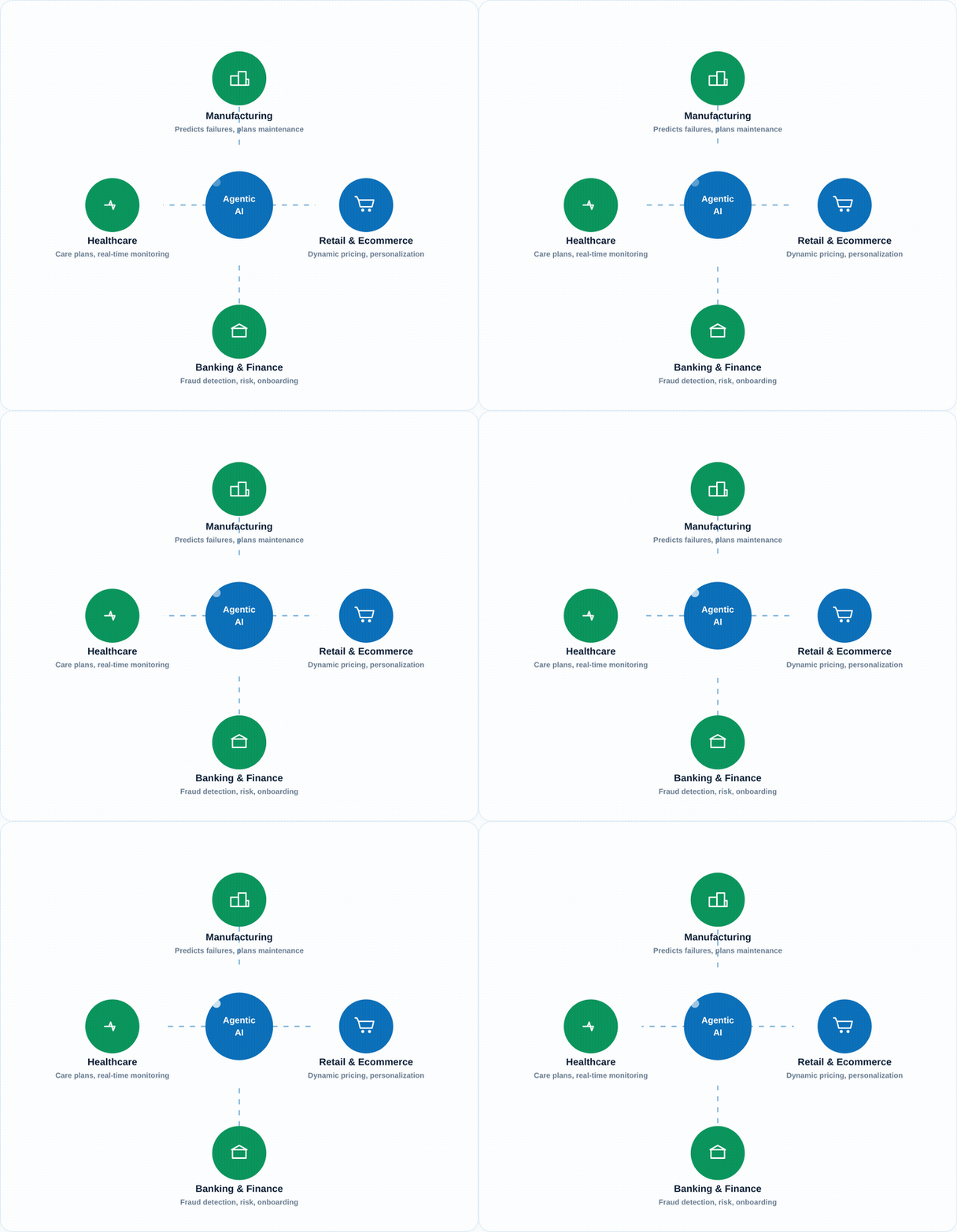
Agentic AI is already doing practical work across sectors:
- Manufacturing — monitors production systems continuously, predicts equipment failures, schedules maintenance, and coordinates inventory and logistics to keep workflows uninterrupted.
- Healthcare — supports clinical decisions by managing appointment scheduling, tracking care plans, and analyzing symptoms, medications, and treatment outcomes in real time, improving continuity of care.
- Retail and e-commerce — personalizes the customer experience in real time: dynamic pricing, product recommendations, demand prediction, and handling complex customer questions across chat and voice.
- Banking and financial services — automates loan processing, detects fraud patterns, improves onboarding, and supports real-time transaction monitoring and risk evaluation.
The Benefits, in Practice
Three benefits show up consistently where agentic AI is deployed well:
- Increased efficiency and productivity. Agents can take on complex, decision-intensive tasks that were previously out of reach for automation, freeing people to focus on strategy, problem-solving, and relationships.
- Enhanced customer experience. Agents can infer intent, anticipate needs, and offer solutions around the clock, with consistent quality regardless of volume.
- Proactive by design. These systems set goals, plan and execute tasks, monitor their own progress, and adjust in real time — without needing continuous human oversight for every step.
Where This Fits in 2026: Adoption Is High, Scaling Is Hard
The 2026 data tells a two-sided story. On one hand, adoption is broad: roughly 79% of companies report some form of AI agent already in use. On the other, scale is rare — only about 23% of organizations are scaling agents in even a single function, and just 15% of US enterprises have reached genuinely orchestrated, multi-agent adoption. Separate research from MIT found that only about 5% of custom enterprise AI tools make it to production despite most companies evaluating them. The gap between pilot and production is still the hard part.
Part of the reason is technical: a Berkeley study on multi-agent systems found failure rates between 41% and 86.7%, with roughly four in five of those failures traced to specification gaps and agents misunderstanding each other rather than any single model being wrong. That’s pushing the industry toward shared interoperability standards instead of custom integrations for every agent-to-tool or agent-to-agent connection. The Model Context Protocol (MCP), created by Anthropic and donated to the Linux Foundation in December 2025, standardizes how an agent connects to external tools and data — by mid-2026 its SDKs had passed a billion downloads combined. Google’s Agent2Agent protocol (A2A), now also under the Linux Foundation, standardizes how one agent discovers and delegates work to another, with over 150 supporting organizations. Together they’re starting to do for agentic AI what REST and HTTP did for web services: making it possible to connect agents built by different teams, on different frameworks, without bespoke glue code for every pair. None of this erases the sobering forecast that a large share of agentic AI projects will be cancelled before they prove their value — but it does mean the projects built on governed access, clear orchestration, and shared protocols are the ones with a real shot at scaling past the pilot stage.
The Takeaway
Agentic AI isn’t here to replace RPA or the people running it — it’s here to extend what both can do, handling the judgment calls that rule-based automation was never built for. The three-part framework (orchestration, agent builder, hybrid stack) is what makes that practical, and it’s already showing up in manufacturing, healthcare, retail, and banking. The catch in 2026 is scale: most companies have started, few have scaled, and the ones most likely to get there are building on governed access and shared protocols like MCP and A2A rather than one-off integrations.
Join The Conversation
Share your perspective. Comments are moderated before they appear.